How to start a dog walking business
•Reading time: 8 minutes
Starting a dog walking business is simple - running one efficiently and profitably is harder. Many people enter the industry because they love dogs and want flexible work, but quickly realise that managing clients, schedules, payments, and expectations is what turns dog walking into a real business.
This step-by-step guide explains exactly how to start a dog walking business in the UK, from legal setup and insurance to finding clients and managing bookings professionally.
Whether you're planning a side hustle or a full-time career, this guide will help you start the right way.
This guide is for
- People starting a dog walking business in the UK
- Dog walkers wanting to operate professionally from day one
In this guide
- Choosing your services
- Registering your business
- Insurance & legal requirements
- Managing clients and bookings
- Marketing
1. Decide what services you'll offer
Before registering anything, define what kind of pet care business you want to run. Dog walking can mean different things depending on your services and pricing structure.
Common services include:
- Solo dog walks
- Group walks
- Puppy visits
- Pet sitting
- Drop-in visits
- Boarding (requires licensing)
- Pet taxi or transport
Starting simple is often best. Many new walkers begin with solo or small group walks and expand later once demand grows.
Think about:
- Your availability
- Travel distance
- Maximum dogs per walk
- Physical capacity
- Insurance limitations
Clear services make pricing, marketing, and scheduling much easier later.
2. Create a simple business plan
You don't need a big complicated document, but you do need a plan.
Your business plan should answer:
- Who are your ideal clients?
- What will you charge?
- How many walks/bookings per week/month do you need to be profitable?
- What areas will you cover?
- How will clients book you?
Many new dog walkers underestimate admin time. When your business is up and running, walking dogs may take 4-5 hours daily, but messaging clients, scheduling, invoicing, and travel planning also take significant time.
Planning early helps you avoid burnout.
3. Register as a Sole Trader
Most UK dog walkers start as sole traders because it's simple and low cost.
To register:
- Go to the HMRC website.
- Register for Self Assessment (opens in a new window).
- Keep records of income and expenses.
You'll need to:
- Submit a yearly tax return
- Track earnings and business costs
- Set aside money for tax
Opening a separate business bank account is highly recommended, as it allows you to keep your personal and business finances separate, making accounting and tax filing much easier.
4. Get a DBS check
While not legally required, a DBS (Disclosure and Barring Service) check builds trust with clients - especially because you may hold house keys or access homes while owners are away.
Many clients now expect proof of background checks before hiring a walker.
Displaying this on your website or marketing materials can significantly increase credibility.
There are many providers offering DBS checks, but it's often simpler and cheaper to go directly through the Government Disclosure and Barring Service (opens in a new window).
5. Choose a business name
Your business name should be:
- Easy to remember
- Easy to spell
- Professional sounding
- Location-relevant (if possible)
- Not already in use
- Reflect your business and values
Examples often include:
- [Town Name] Dog Walking
- [Your Name] Pet Services
Before deciding, check:
- Google search results
- Social media availability
- Domain name availability
Consistency across website, email, and social media helps clients find you easily.
6. Get the right insurance
Insurance is essential for any dog walking business in the UK.
The insurance you require depends on your business and circumstances. At a minimum, consider:
- Public Liability Insurance
Protects you if a dog causes injury or property damage. - Care, Custody & Control Insurance
Covers animals while they are under your supervision. - Key Cover
Protects against lost client keys. - Vehicle Insurance (Business Use)
Required if transporting dogs regularly.
Insurance providers often offer pet-business bundles tailored to walkers and sitters. Make sure you get the correct cover for your specific services and needs.
7. Understand licensing requirements
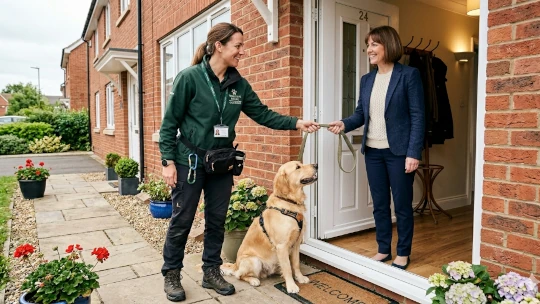
Dog walking itself does not require a licence.
However, licensing is required if you offer:
- Dog boarding in your home
- Daycare services
- Certain commercial animal activities
Licensing rules vary by local council, so always check your council's animal activity licensing guidance before expanding services.
8. Prepare forms, contracts, and terms and conditions
Professional paperwork protects both you and your clients.
Essential documents include:
- Client intake form
- Pet profile information
- Veterinary details
- Emergency contacts
- Service agreement
- Terms & conditions
- Cancellation policy
Clear expectations prevent misunderstandings later - especially around cancellations, payments, and responsibilities.
9. Training and qualifications (optional but valuable)
You don't need qualifications to become a dog walker in the UK, but training builds confidence and trust.
Useful areas include:
- Canine first aid
- Dog behaviour and body language
- Recall training basics
- Reactive dog handling
Clients increasingly look for walkers who understand behaviour and safety, not just exercise.
You don't need to learn everything all at once. Start with the basics and gradually expand your knowledge. Find what interests you and develop your skills in that area. It will also provide additional services and expertise you can offer, to help you stand out from other dog walkers in your area.
10. Set up a system to manage clients and bookings
Now that you've done all that, you're going to have customers flooding through your door! This is where many new businesses struggle.
At first, you might use:
- Notebooks
- WhatsApp messages
- Calendars
- Spreadsheets
But as your business grows, this often leads to:
- Double bookings
- Missed walks
- Forgotten details
- Late payments
- Admin overload
- Stress
- Burnout
Using a dedicated system early helps you stay organised and appear professional.
Tools like Leadr allow dog walkers to:
- Organise client information
- Store pet profiles and notes
- Track bookings
- Manage schedules
- All in one place
Good organisation doesn't just save time - it improves client trust and reduces stress as your business grows.
Leadr is focused towards small, solo dog walkers, and has a free plan, so you can test out the software without any cost until your business grows.
11. Market your dog walking business
Now that you've got your business setup and you know what services you're offering, it's time to get your first customers.
There are hundreds of ways to market your business. Most successful dog walkers get their first clients locally - not through ads, but through visibility and trust.
Create a website
The majority of people go online when they're searching for a service, such as a dog walker. A simple website helps potential clients find and trust you. Include:
- Services
- Service area
- Pricing guide
- Testimonials
- Contact details
See our guide on why dog walkers need a website and how to setup a dog walking website in under one hour.
Optimise Google Business Profile
This is one of the most powerful free marketing tools.
When people go online to search for a dog walker, they want someone local and trustworthy. If they search for "Dog walker near me" and you don't have a Google Business Profile, you're not going to be listed in the Google local search results.
Encourage reviews early - they dramatically influence local search rankings.
Use social media
Love it or hate it, social media is a powerful marketing tool for small local businesses.
Post:
- Pet photos (with permission)
- Pet highlights
- Tips for owners
- Educational content for pet owners
- Behind-the-scenes content
- Who you are and about your business
- What you offer that nobody else does
Consistency matters more than perfection.
Word of mouth
Happy clients remain the strongest growth driver in pet care businesses. Keep your clients happy and they will recommend you to their friends and family.
12. Start small and grow sustainably
We dream of being rushed off our feet with too many clients and dogs to service. But that's not always the best way to grow a business.
Many successful dog walkers grow slowly and intentionally. Focus first on:
- Strong client relationships
- Clear communication
- Happy pets
- Reliable routines
- Organised systems
Avoid overbooking too quickly. Give yourself time and space to find your feet, work out your routines, and grow your business at your own pace. Consistency builds long-term reputation.
Final thoughts
Starting a dog walking business in the UK is one of the most accessible ways to build a flexible, rewarding career working with animals. The barrier to entry is low, but long-term success comes from treating it like a professional business from day one.
By setting up the right legal foundations, protecting yourself with insurance, creating clear processes, and managing clients efficiently, you can build a business that grows sustainably - without becoming overwhelmed.
The walkers who succeed long-term aren't just great with dogs; they're organised, reliable, and easy for clients to work with.
Start simple, stay consistent, and build systems that support your growth.
Try a simpler way to run your dog walking business
Leadr helps dog walkers keep schedules and pet profiles organised in one simple place, so you can focus on the dogs, not the admin.
Try for freeGet more tips in your inbox
Subscribe to our newsletter for practical guides and advice to help you grow your dog walking business.
Related posts
08 October 2026
How dog walkers can manage bookings without stress
Learn how to manage dog walking bookings, clients, pets and invoicing with a simple process designed to reduce admin and keep your business organised.
26 June 2026
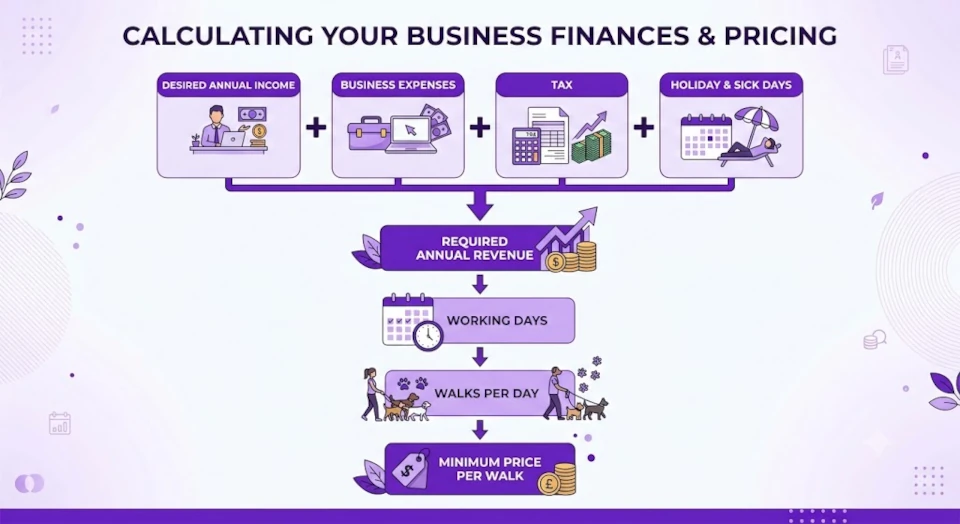
Dog walking pricing guide: How much should you charge?
Not sure what to charge for dog walking? Learn how to calculate profitable rates, cover your costs, avoid common pricing mistakes, and attract the right clients for your business.
27 April 2026
The true cost of a missed booking and how to prevent it
Missing a dog walking booking can cost more than just one walk. Learn the real impact on your business and how to prevent it with a simple system.