Dog walking pricing guide: How much should you charge?
•Reading time: 10 minutes
One of the biggest challenges for new dog walkers is deciding what to charge. Search online and you'll find wildly different answers, from £10 walks to £30+ premium services.
The truth is that there isn't a single "correct" price. The right rate depends on your costs, income goals, location, services, and the type of clients you want to attract.
In this guide, we'll show you how to calculate profitable dog walking prices, avoid common pricing mistakes, and build a business that pays you what you're worth.
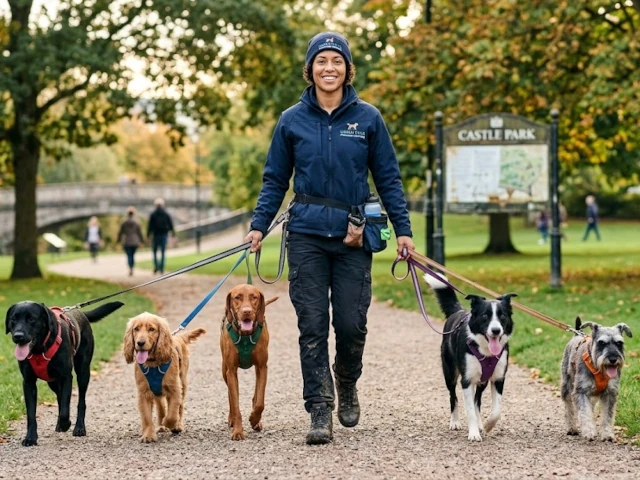
One of the most common questions dog walkers ask is:
"How much should I charge?"
You'll see the same question posted in Facebook groups every week, usually followed by dozens of completely different answers:
£10. £15. £20. £25 minimum.
The problem is that none of those answers are necessarily right for your business.
A dog walker in rural Lincolnshire has different costs, competition, travel times and income goals than a dog walker in central London. A dog walker taking six dogs in a group walk has a completely different business model to someone offering premium solo walks.
Instead of copying what everyone else charges, you need to understand how to set prices that work for your business.
In this guide, we'll explain how to calculate your rates, avoid common pricing mistakes, and build a profitable dog walking business that doesn't leave you overworked and underpaid.
Stop asking Facebook what you should charge
Facebook groups are one of the worst places to determine your pricing.
Why?
Because the people answering:
- Live in different parts of the country
- Have different expenses
- Have different experience levels and qualifications
- Offer different services
- Have different business goals
- Have staff and premises
- Are part-time or full-time
- Might be VAT registered
Someone charging £10 per walk may only be looking for pocket money. Another charging £25 may be operating a full-time business with insurance, fuel costs, professional qualifications and staff to pay.
Neither price tells you what your business should charge.
Your pricing should be based on your business, your costs and your goals - not what strangers on the internet charge.
Start with what you need to earn
Instead of asking what everyone else charges, ask yourself:
"How much do I need to earn?"
Let's imagine your target income is £35,000 per year. You need to account for:
- Income tax
- National Insurance
- Fuel
- Vehicle maintenance
- Insurance
- Equipment
- Software
- Marketing
- Sick days
- Holidays
Suddenly, earning £35,000 requires generating significantly more than £35,000 in revenue.
Many new dog walkers forget that business income and personal income are not the same thing.
Work backwards from your desired income and build your pricing around the numbers.
Calculate your real costs
Before setting prices, list every business expense you expect to have. Typical costs include:
- Public liability insurance
- Vehicle insurance
- Fuel
- Vehicle wear and tear
- Dog walking equipment
- Website hosting
- Dog walking software
- Advertising
- Professional memberships
- First aid training
- Accounting services
Many dog walkers underestimate how much their vehicle costs them.
A 30-minute walk is rarely just 30 minutes. There may be:
- Travel to the client
- Collecting dogs
- Returning dogs home
- Cleaning equipment
- Client communication
- Scheduling and administration
When calculating pricing, consider the entire job, not just the walking time.

Work out your effective hourly rate
Let's say you charge £12 for a 30-minute walk. Sounds reasonable.
But if you spend:
- 10 minutes travelling
- 30 minutes walking
- 10 minutes dropping off
- 10 minutes handling admin
You've spent an hour.
Your £12 walk has become a £12 hourly rate before expenses. After fuel, insurance and tax, that number becomes even smaller.
This is one reason many dog walkers feel busy but struggle to make the income they expected.
Understanding your effective hourly rate helps prevent this.
Don't compete on price
One of the biggest mistakes new dog walkers make is trying to be the cheapest option.
At first, this feels logical. Lower prices should attract more customers, right? Not necessarily.
Low prices often attract clients who:
- Are the most price-sensitive
- Compare every quote
- Question every charge
- Expect discounts
- Are quick to switch providers
These clients tend to be the most demanding, require the most effort, and are often the quickest to question your value.
Meanwhile, clients who value reliability, professionalism and trust are usually willing to pay more for a great service.
Instead of asking:
"How can I be cheaper?"
Ask:
"How can I provide more value?"
Increase your revenue without raising your service price
Many dog walkers assume the only way to earn more is to increase their standard walk price.
In reality, additional services can significantly increase revenue without making conversations with clients feel awkward.
Instead of trying to "sell" extra services later, include them naturally within your booking process.
Examples might include:
- Additional dogs from the same household
- Puppy visits
- Feeding visits
- Medication administration
- Treat packs
- Pet taxi services
- Extended walk durations
- Weekend or bank holiday visits
When clients see these options while booking, they're making a choice rather than being sold to. This feels more natural and often leads to higher average booking values.
For example:
- £15 walk
- £10 additional dog
- £3 medication visit
A booking that might have been worth £15 becomes worth £28 without increasing your core rate, nearly doubling your hourly rate for little additional effort.
The goal isn't to pressure clients into spending more. It's to ensure you're properly compensated for the additional value and time you provide.
Don't be afraid of surcharges
Not every booking costs your business the same amount to deliver.
A weekday lunchtime walk that's part of your regular route is very different from a last-minute Sunday evening request.
Many dog walkers undercharge because they use a single price for every booking, regardless of the inconvenience or additional costs involved. Consider whether surcharges make sense for:
Weekend walks
Weekends are valuable personal time. If you're giving up part of your weekend to provide a service, it's reasonable to charge accordingly.
Bank holidays
Many businesses charge more on bank holidays, and pet care is no different. You may have fewer available hours, higher demand, and less flexibility. A bank holiday surcharge helps ensure you're properly compensated.
Short-notice bookings
A client requesting a walk tomorrow may require schedule changes, route adjustments, or moving other work around. A small late-notice fee can help offset the disruption.
Out-of-area visits
If a booking falls outside your normal service area, additional travel time and fuel costs should be considered.
The purpose of surcharges isn't to penalise clients. It's to reflect the additional cost, inconvenience, or demand associated with certain bookings.
The key is transparency. Clearly explain any surcharges on your website and during onboarding so clients know what to expect.
Most clients are perfectly happy to pay additional fees when they understand the reason behind them.
Differentiate yourself
Some areas are saturated with dog walkers, with many offering almost identical services. If customers struggle to see a difference between services, they'll often choose the cheapest option.
The easiest way to justify higher prices is to provide a better overall experience.
Examples include:
- Detailed pet profiles
- GPS-tracked walks
- Walk reports
- Photos after visits
- Online booking
- Reliable communication
- Flexible scheduling
- Professional branding
- Qualifications and training
People don't just buy dog walks. They buy peace of mind.
The more trust and convenience you provide, the less important price becomes.
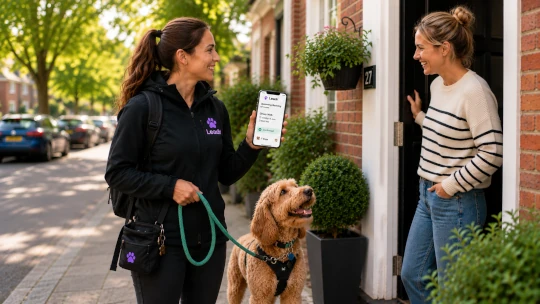
Avoid the "Cheap starter price" trap
Another common mistake is charging low rates when launching a business, with the intention of increasing them later.
The problem?
Raising prices is often harder than setting them correctly in the first place.
Imagine you launch at £10 per walk.
A year later you realise you should be charging £15.
A 50% increase feels significant to existing clients, even if the original price was too low.
Some clients may leave. Others may question the increase.
If you see local competitors offering cheap rates, you may be tempted to do the same, but remember - being cheap doesn't make your business sustainable, and they are likely to get burnt out or go out of business sooner than a business with a well-structured pricing model.
Starting with sustainable pricing avoids this problem altogether.
You don't need to be the cheapest dog walker in town to win clients. You need to be the right dog walker for the right clients.
Research your local market
While you shouldn't blindly copy competitors, you should still understand your local market.
Look at:
- Local dog walking websites
- Google Business Profiles
- Facebook business pages
- Local pet care providers
Ask questions such as:
- What services are they offering?
- Are walks group or solo?
- What's included?
- Are there premium options?
- What makes each business different?
This helps you understand where your service fits within the local market.
Think of competitor pricing as a reference point, not a rulebook.
What are dog walkers actually charging?
One of the challenges with pricing advice is that every dog walking business is different. However, it can still be useful to see what real businesses are charging.
Based on booking data recorded in Leadr:
| Duration | Lowest | Median | Highest | Average |
|---|---|---|---|---|
| 60 minutes | £7.50 | £15.00 | £30.00 | £18.15 |
Data based on booking records in Leadr as of June 2026.
The wide range highlights an important point: there is no single "correct" price.
Some dog walkers charge significantly less, while others successfully charge nearly double the market average. The difference often comes down to:
- Location
- Experience
- Service quality
- Group vs solo walks
- Additional services included
- Business positioning
Rather than trying to match the average, focus on building a pricing structure that supports your income goals and reflects the value you provide.
Group walks vs solo walks
Most dog walkers charge different rates depending on the services they provide.
Group walks typically allow multiple dogs to be walked simultaneously, making them more profitable per hour.
Solo walks require dedicated time for a single dog and are often priced higher.
For example:
- Group walk: Lower price per dog, higher overall revenue
- Solo walk: Higher individual price, lower capacity
Some dog walkers offer both types of walks, some specialise in one or the other. The right model depends on your preferences, local demand and business goals.
Should you publish prices on your website?
Many dog walkers wonder whether they should display prices publicly. In most cases, the answer is yes.
Transparent pricing:
- Builds trust
- Saves time
- Filters unsuitable enquiries (price-sensitive clients)
- Reduces back-and-forth conversations
Potential clients generally want at least a rough idea of pricing before contacting you.
You can always explain that certain services may vary depending on location, duration or requirements.
Use data to review your pricing
Pricing isn't something you set once and forget. Review it regularly.
Ask yourself:
- Are you fully booked?
- Are enquiries increasing?
- Are expenses rising?
- Are clients accepting quotes without hesitation?
- Are you achieving your financial goals?
If demand is strong and your schedule is full, it may be time to increase your rates. Many dog walkers discover they could have charged more months ago.
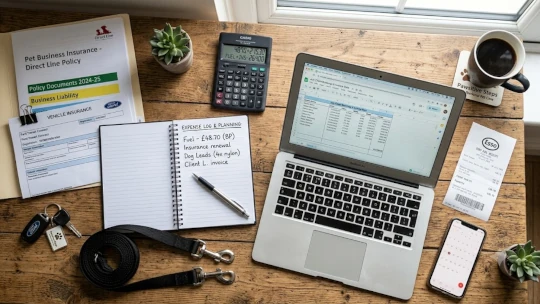
Don't be afraid to change your pricing
Many dog walkers are hesitant to change their pricing, fearing they'll lose clients or face backlash.
You should review your pricing at least once per year. Otherwise, factoring in inflation and rising costs, your earnings in real terms will decrease year-on-year.
Before you rule out a price increase out of fear or "clients won't pay that in my area" - try it out and prove the theory. You may be surprised at how many clients are willing to pay more for a reliable, professional dog walking service.
You can try increasing the rates for new clients first, or for specific services.
You can try multiple modest price increases over time instead of a single increase.
Pricing is not a rigid, one-way thing. As a business owner, you are entitled to adjust your pricing as and when necessary.
Don't forget about VAT
As your business grows, VAT becomes an important consideration.
Many dog walkers start as sole traders and don't think about VAT until they're approaching the registration threshold.
The mistake some businesses make is absorbing VAT into their existing prices.
For example:
- Current price: £20
- VAT registered: £20 still charged
- Revenue after VAT: £16.67
You've effectively given yourself a 16.7% pay cut.
Instead, pricing should be reviewed before reaching the threshold so you understand the impact on your margins and profitability.
If your target rate is £20 before VAT, your customer price may need to become £24 including VAT.
Many businesses delay price increases because they're worried about client reactions. However, absorbing VAT can quickly erode profits and make growth feel less rewarding.
You shouldn't be penalised for running a successful, in-demand business. Your clients clearly value your service, and the majority will be happy to pay a fair price.
As your business expands, it's worth discussing pricing strategy and VAT implications with an accountant so you can plan ahead rather than reacting at the last minute.
Final thoughts
The best dog walking price isn't whatever someone tells you in a Facebook group. It's the price that allows your business to be profitable, sustainable and enjoyable to run.
Calculate your costs.
Understand your income goals.
Research your market.
Focus on value rather than being the cheapest option.
Most importantly, remember that clients aren't simply paying for a walk. They're paying for reliability, trust, professionalism and the confidence that their dog is in safe hands.
Price accordingly.
Frequently asked questions
Build a more profitable dog walking business
Track bookings, manage clients and stay organised with software designed for dog walkers and pet care professionals.
Start for freeGet more tips in your inbox
Subscribe to our newsletter for practical guides and advice to help you grow your dog walking business.
Related posts
08 October 2026
How dog walkers can manage bookings without stress
Learn how to manage dog walking bookings, clients, pets and invoicing with a simple process designed to reduce admin and keep your business organised.
22 May 2026
Calendars vs spreadsheets vs apps: What's best for managing dog walks?
Compare paper diaries, spreadsheets, calendars, and dog walking software to discover the best way to manage bookings, schedules, clients, and admin as your business grows.
27 April 2026
The true cost of a missed booking and how to prevent it
Missing a dog walking booking can cost more than just one walk. Learn the real impact on your business and how to prevent it with a simple system.